
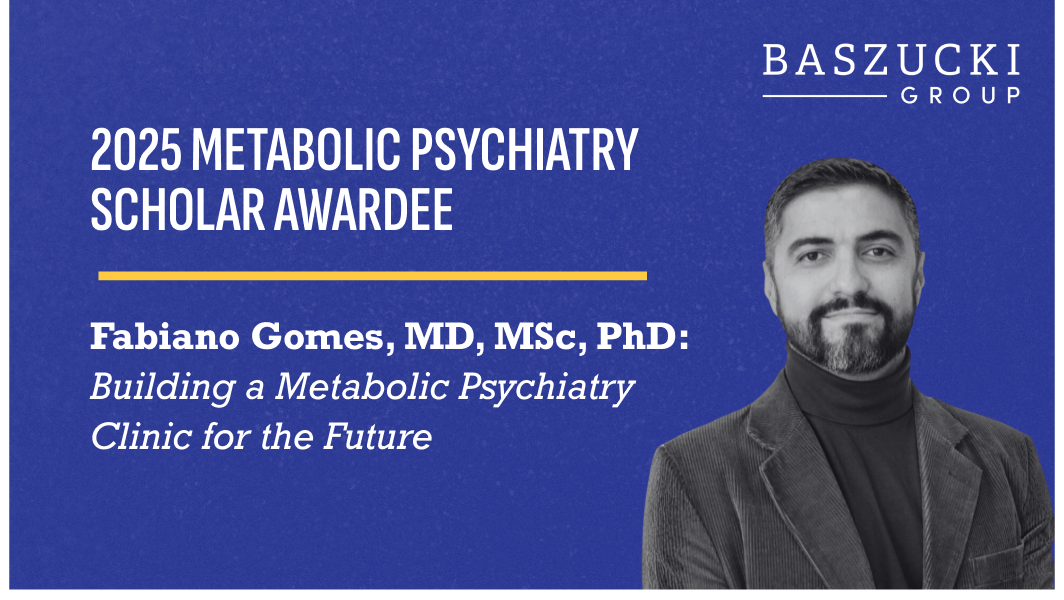
Dr. Fabiano Gomes has been interested in the link between physical and mental health since
his early years of medical training. “I was struck by how many of my patients were gaining
weight, developing diabetes, and facing vascular problems alongside their mental health
challenges,” says Gomes. That concern led him to focus on insulin resistance and metabolic
syndrome in people with bipolar disorder, beginning a line of research in 2005 that he carried
through his postgraduate studies. “I wanted to understand how these medical comorbidities
were influencing the course of illness—and why outcomes were so much worse for patients with
metabolic issues.”
After completing his PhD in 2012, Gomes returned to his hometown of Brasília, Brazil where he
balanced private practice with volunteer academic work. His work shifted in 2020 when he
moved his psychiatry practice to Queen’s University in Ontario, Canada. With support from the
Brain & Behavior Research Foundation, he began studying the ketogenic diet in depression.
“We recruited ten patients and provided a medical ketogenic diet intervention,” he explains. “It
was intensive, structured, and supported at every step by both dieticians and psychiatry staff– it
showed us what might be possible in ketogenic therapies, with incredible results.”
That pilot trial laid the groundwork for Gomes’s goal to establish a dedicated metabolic
psychiatry clinic at McMaster University, where he became an Assistant Professor in 2022 . “We
want to provide a truly comprehensive framework,” he says. The clinic will offer
psychoeducation, structured counseling around sleep and stress, physical activity programs,
and nutritional support. The aim is not just to treat individuals, but to build capacity—training
medical students, psychiatry residents, and graduate students, and preparing a new generation
of clinicians to integrate metabolic psychiatry into their practice. “We believe this approach can
reduce the burden of medical comorbidities, help patients achieve sustained remission, and
even reduce reliance on medications.” Seeing the results of nutritional ketosis has strengthened
his conviction that lifestyle-based interventions can have a profound impact. “It was
mind-blowing to realize there was a non-pharmacological intervention that could make such a
difference,” he says.
The journey has not been without challenges. Gomes faced skepticism from both patients and
colleagues about non-standard interventions. “Ten years ago, people didn’t take it seriously,” he
remembers. “Now, with more data, that resistance is changing. The evidence has to be solid, not
hype. That’s the only way this field will move forward.”
As he builds his research team, Gomes emphasizes creating a safe, supportive environment
where creativity can thrive. He emphasizes the importance of peer mentorship. “Find your
group—your crew,” he says. “It’s not just about having a senior mentor, though that’s essential.
You also need peers at your level who you can share concerns and ideas with, who understand
what you’re going through.”
The Metabolic Psychiatry Scholar Award is key to turning Gomes’ vision into reality. “This award
allows us protected time—for me as the lead investigator, and for our dieticians,” he says. “In
Canada, most major funders won’t allow you to use research money for your own salary, so
having this kind of support is rare. It means I’ll be able to see patients, establish the clinic, and
run research in parallel with clinical care.” And the benefits of the award extend well beyond
funding. Through Baszucki Group, he is able to tap into a global network of researchers and
mentors in the metabolic psychiatry community, as well as communications support that he says
is invaluable. “As clinician scientists, we’re rarely trained in how to communicate our work to
broader audiences,” he reflects. “This award gives us editorial support, mentorship, and tools to
translate knowledge in ways that really reach people. That’s going to be a big step forward in my
career.”